According to WRAP (the Waste and Resources Action Programme), the average UK household throws away around £620 of food a year that could have been eaten (about £1,030 for a household of four; WRAP's latest figures, for 2022). That's roughly £12 a week going straight in the bin — wilted salad, forgotten yogurt, bread that went stale, the second half of a pack of mince you only needed half of.
The biggest reason, in WRAP's figures? Food that isn't used in time. Buying without a plan makes that more likely.
This guide covers why food waste happens, how a smart shopping list helps prevent it, and practical steps you can take this week to cut your waste — and your food bill — significantly.
Why UK households waste so much food
Food waste isn't deliberate. Nobody puts chicken in the bin on purpose. It happens because of four recurring patterns:
We buy too much
"That's on offer" and "I might need that" lead to buying things we don't actually need this week. Supermarkets are designed to make you buy more — end-of-aisle promotions, multibuys, and "meal deal" packaging all encourage impulse purchases.
WRAP estimates UK households throw away around 15% of the food they buy, by weight (that includes bits you can't eat, like bones and eggshells).
We buy the wrong amounts
A recipe calls for 200g of spinach, but it only comes in 250g bags. Another recipe uses half a tin of coconut milk. That extra 50g of spinach and half-tin of coconut milk go off in the fridge within days.
This problem multiplies across a week of cooking. Five recipes with mismatched quantities means five half-used ingredients going to waste.
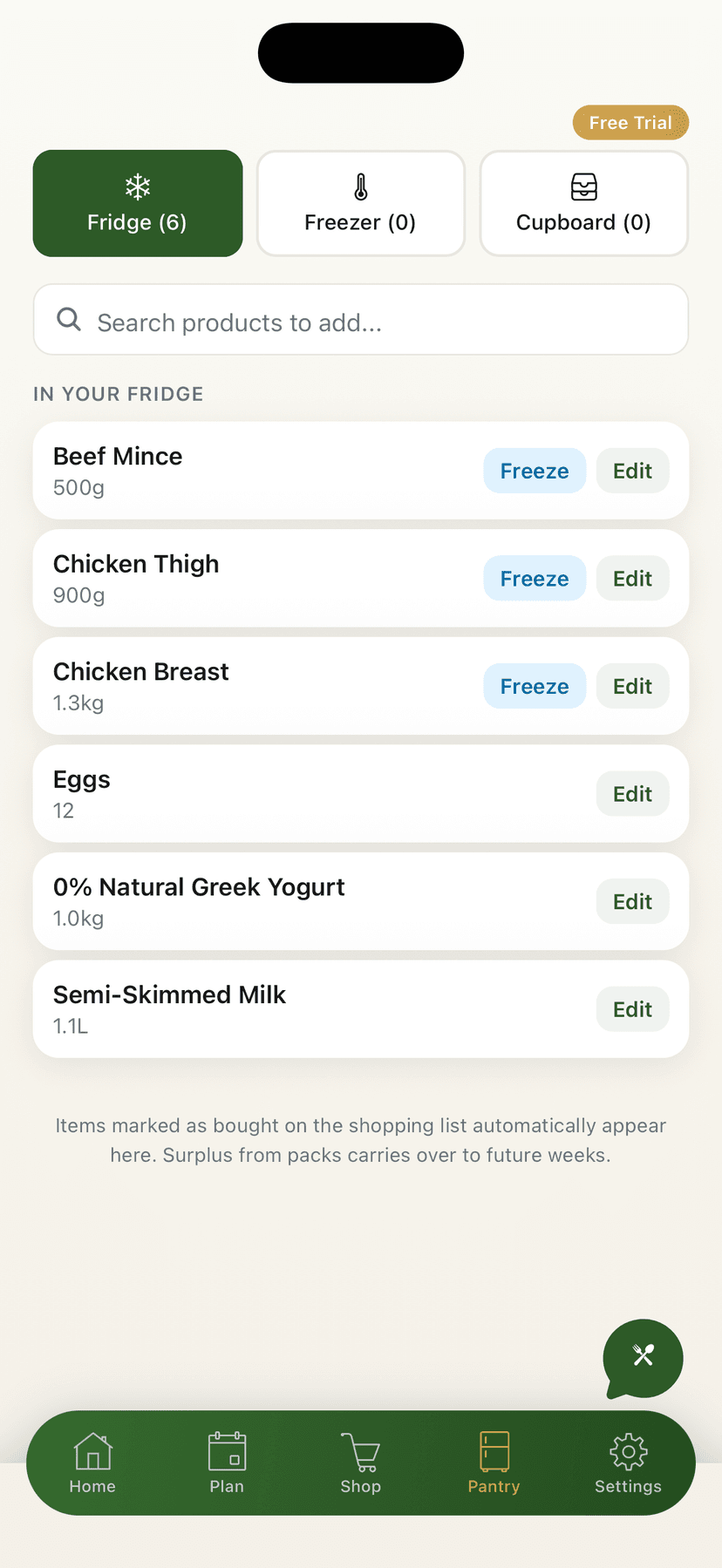
We forget what we have
That tin of chickpeas at the back of the cupboard? It's been there since 2024. The bag of frozen prawns hiding behind the ice cream? Forgotten. The block of cheddar slowly drying out? Nobody planned to use it.
Without a system to track what's in your fridge, freezer, and cupboard, ingredients get buried and expire.
We don't eat leftovers
Batch cooking only works if you actually eat what you made. A pot of curry that "someone will eat tomorrow" often sits in the fridge for four days before being thrown away.
The fix is simple: plan to eat leftovers. Build them into your weekly schedule explicitly — "Tuesday lunch: leftover curry from Monday."
What a smart shopping list looks like
A smart shopping list isn't just "things I need to buy." It's a list calculated from specific meals, with exact quantities, accounting for what you already own.
Here's the difference:
Normal shopping list:
- Chicken
- Rice
- Veg
- Cheese
- Stuff for sandwiches
Smart shopping list:
- Chicken thigh, 1 pack (900g) — used in Monday dinner + Wednesday dinner
- Basmati rice, 1kg bag — used in 3 meals this week
- Carrots, 1kg bag — used in Monday, Tuesday, Thursday, Friday
- Cheddar, 1 x 400g block — used in Tuesday lunch + Thursday dinner, 109g carries to next week
- Wholemeal bread, 1 loaf — sandwiches Mon-Fri
The second list tells you exactly what to buy, why you're buying it, and how much you need. There's no guesswork, and any surplus is planned.
Five steps to a lower-waste weekly shop
1. Plan your meals first
Decide what you're eating for the week — breakfast, lunch, dinner, and snacks. Everything else flows from this. No plan means no direction, which means impulse buying, which means waste.
If you're new to meal planning, start with five dinners and keep breakfast and lunch simple (eggs, toast, wraps, yogurt).
2. Calculate exact quantities
If three recipes use onions this week, add up the total: 450g. That's 3 medium onions, not a 1.5kg net bag. If two recipes use tinned tomatoes, buy 2 tins — not a 4-pack because it's "better value."
Better value means nothing if you throw two tins away.
3. Check what you already have
Before you write your list, open the fridge, freezer, and cupboard. That half bag of rice, the frozen chicken thighs, the tin of beans — they're all ingredients you don't need to buy again. Build your meal plan around what you already have, then buy only what's missing.
4. Buy by pack size, not recipe size
If you need 291g of cheddar across the week, buy a 400g block. The leftover 109g carries into next week. This is intentional surplus — you know it's there, you've planned for it, and it's far less likely to go to waste.
The key is awareness. Surplus you've planned for is different from surplus that happens by accident.
5. Group by aisle
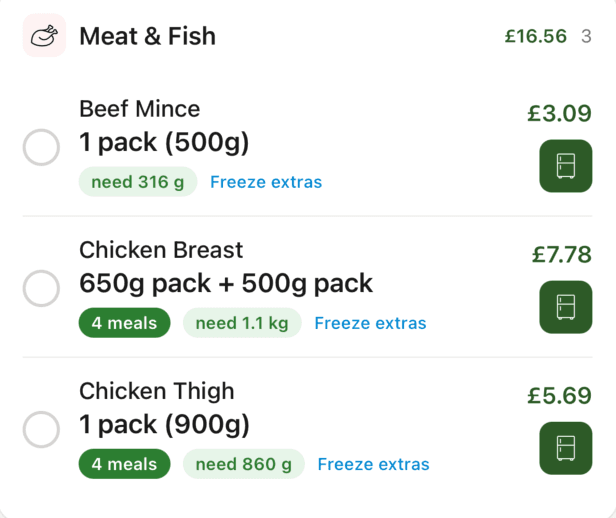
A list organised by supermarket section (fruit and veg, dairy, meat, bakery, cupboard) means faster shopping and fewer impulse buys. When you know exactly where you're going and what you're getting, you spend less time browsing — and browsing is where impulse purchases happen.
The budget impact of reducing food waste
If the average UK household wastes £620/year, cutting that waste by even half saves £310. That's about £26/month back in your pocket — from food you were buying and binning.
Combined with smart protein shopping and meal prepping, you could cut your weekly food bill further without eating less or sacrificing quality.
Where the savings come from
- Fewer impulse purchases: Shopping with a plan cuts down on the "I might need this" buys
- Fewer duplicate ingredients: Checking what you have means you don't buy another jar of curry paste when there's one already open
- Using full packs: Planning meals that share ingredients means fewer half-used packets
- Eating leftovers: Building leftover meals into the plan means less gets forgotten in the fridge
How Plan X Prep handles this automatically
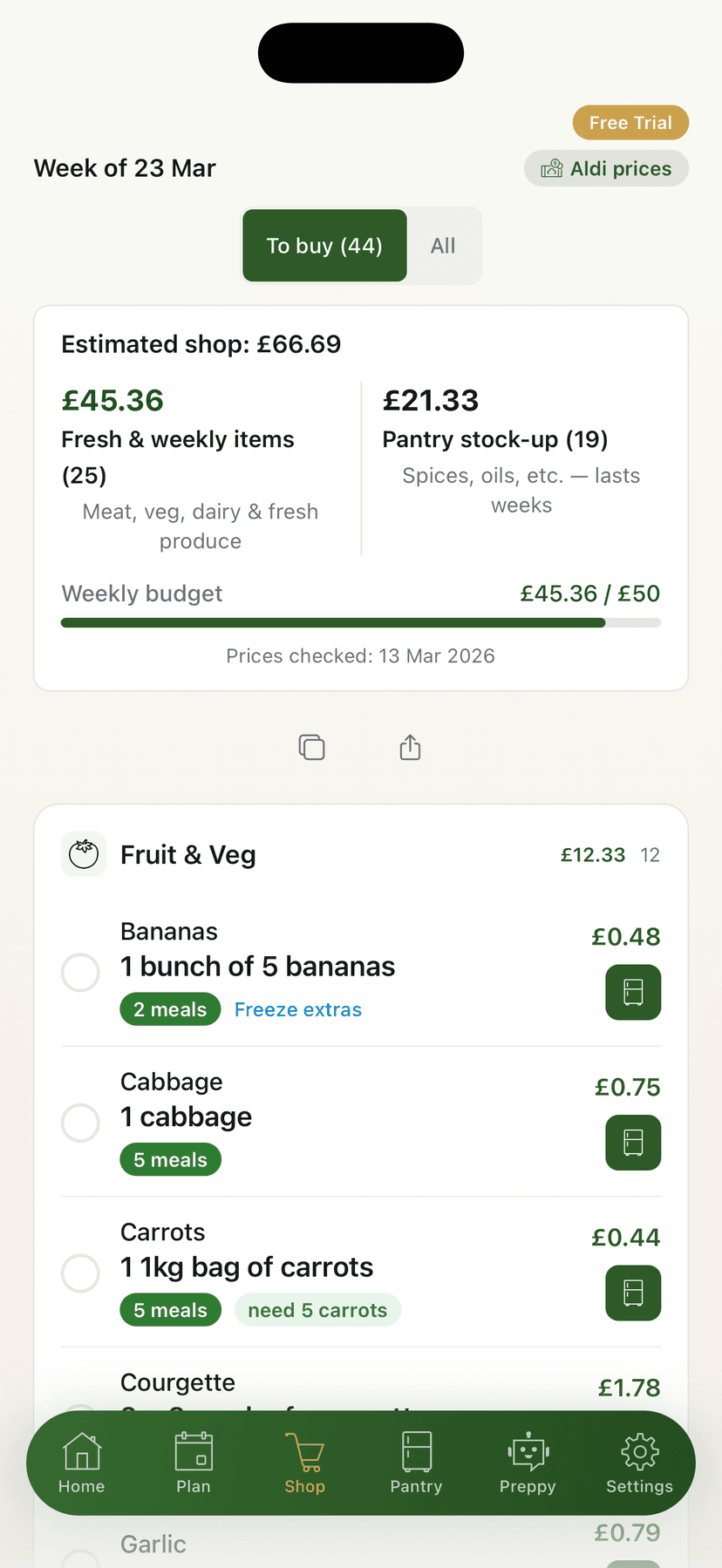
Plan X Prep generates your shopping list automatically from your weekly meal plan. It does the hard work for you:
- Adds up the quantities across all your meals — no manual adding
- Groups items by supermarket section — fruit & veg, meat & fish, dairy & eggs and so on
- Shows a price for every item — from 2,000+ real product prices, checked monthly (Aldi first, with Tesco, Sainsbury's and Asda filling the gaps), or an estimate where there's no match
- Tells you which packs to buy — "1 pack (900g)" not just "chicken thigh", rounded up to whole packs
- Flags how many meals each ingredient is used in — so you know why you're buying it
- Checks your kitchen before it writes your list — anything in your Pantry tab (fridge, freezer or cupboard) comes off the list, so you're less likely to buy it twice
- Shows your estimated shop against your weekly budget — and tells you if a week comes in over
Everything is designed to cut down the guesswork that leads to waste.
The bottom line
The £620/year wasted food figure isn't inevitable. One change can make a real dent in it: shopping from a plan instead of shopping on impulse. Know what you're eating, buy what you need, use what you buy.
Whether you use an app or a pen and paper, the principle is the same. But if you want the maths done for you — quantities calculated, pack sizes matched, items grouped by supermarket section, prices checked monthly — join the Plan X Prep waitlist and we'll email you when we launch.
Ready to take the guesswork out of meal planning?
Plan X Prep builds your personalised weekly meal plan around your macros, with real UK supermarket prices and a full shopping list. Join the waitlist and we’ll email you when we launch.
Join the Waitlist