Getting enough protein is one of the biggest levers for body composition — whether you're losing fat, building muscle, or just trying to stay full between meals. But scrolling through fitness content, you'd think you need a freezer full of salmon fillets and a monthly subscription to a supplement company.
The truth? Hitting 130g+ of protein a day is completely doable on a normal UK supermarket budget. No protein bars. No exotic ingredients. Just smart shopping and a bit of planning.
Why protein matters more than you think
Protein does more than build muscle. It's the most satiating macronutrient — calorie for calorie, it tends to keep you fuller for longer than carbs or fat. That can mean fewer cravings, less snacking, and an easier time sticking to your calorie target.
For anyone in a calorie deficit (trying to lose weight), protein matters even more. Some of the weight you lose can come from muscle as well as fat. Eating enough protein, ideally alongside some strength training, helps you hold on to more of that muscle.
How much protein do you actually need?
It depends on how active you are. The British Dietetic Association puts it at about 0.75g per kilogram of body weight a day if you don't exercise, and roughly 1.4–2.0g per kg if you train hard for strength or endurance sport. For an 80kg person, that's about 60g a day without exercise, or about 112–160g with hard training, so the 130g in this guide sits comfortably inside the training range.
That sounds like a lot, but once you know which foods to lean on, it adds up quickly. If you have a health condition, check with your GP before making big changes to what you eat.
The cheapest high-protein foods in UK supermarkets
These are your workhorses — high protein per pound spent, available at Aldi, Tesco, Sainsbury's, and Asda.
Chicken thighs (not breast)
£2.99/kg at Aldi (October 2026 price), with about 20g protein per 100g of raw meat (nearer 25g once cooked). Thighs are juicier, cheaper, and harder to overcook than breast. They're also more forgiving in batch cooking — they reheat without going dry.
A single 150g thigh (weighed raw, on the bone, so about 100g of meat) gives you about 20g of protein for around 45p. That's good value for meat.
Eggs
A box of 12 for under £2.50. Two eggs give you 12g protein for about 40p. Eggs are incredibly versatile — scrambled, boiled, in wraps, in fried rice, or baked into frittatas.
Greek yogurt (0% fat)
Aldi's Greek yogurt is £1.99 for a 500g tub, packing 50g+ protein. Mix with protein powder and frozen berries for a 40g+ protein breakfast in under two minutes.
Tinned tuna
Roughly 25g protein per tin, from 59p each at Aldi. Keep a stack in the cupboard for quick lunches — tuna mayo wraps, pasta, or jacket potatoes.
Red lentils
About 24g protein per 100g dry (8–9g once cooked), and dirt cheap. They bulk out any stew, curry, or bolognese while adding fibre and protein. A 500g bag costs 89p at Aldi and lasts multiple meals.
Cottage cheese
Around 11g protein per 100g, from 85p for a 300g tub at Aldi. Eat it on toast, with fruit, or stirred into pasta as a high-protein sauce.
How to structure your day around protein
The trick isn't one massive protein hit — it's spreading 25–40g across each meal. Here's what a typical high-protein day looks like on a budget:
- Breakfast: Greek yogurt with protein powder and oats — 40g protein, ~£1.15
- Lunch: Chicken thigh wrap with salad and hummus — 35g protein, ~£1.20
- Dinner: Lentil bolognese with extra lean mince — 35g protein, ~£1.80
- Snack: Two boiled eggs — 12g protein, ~40p
That's 122g of protein for roughly £4.55. Add a glass of milk and some cheese in your wrap and you're over 130g without trying.
Protein at breakfast is the key
Many people front-load their protein at dinner and neglect breakfast. By the time they eat a high-protein dinner, they're already behind. Starting with 30–40g at breakfast means you only need to maintain 30g per meal for the rest of the day — much more achievable.
Common mistakes that kill your protein intake
Relying on protein bars and ready-made shakes
They're convenient, but expensive. A single protein bar costs £1.50–3.00 and delivers 20g protein. Two eggs cost 40p and deliver 12g. A 500g tub of Greek-style yogurt costs 95p and delivers 20–30g. Real food usually wins on cost.
Ignoring vegetarian protein sources
Lentils, chickpeas, beans, Greek yogurt, eggs, and cottage cheese are all cheap, high-protein, and widely available. You don't need meat at every meal to hit your target.
Not planning meals in advance
This is the big one. Without a plan, you default to whatever's convenient — and convenient usually means low-protein. A weekly meal plan designed around your protein target takes most of the guesswork out.
Use an app to plan around your protein target
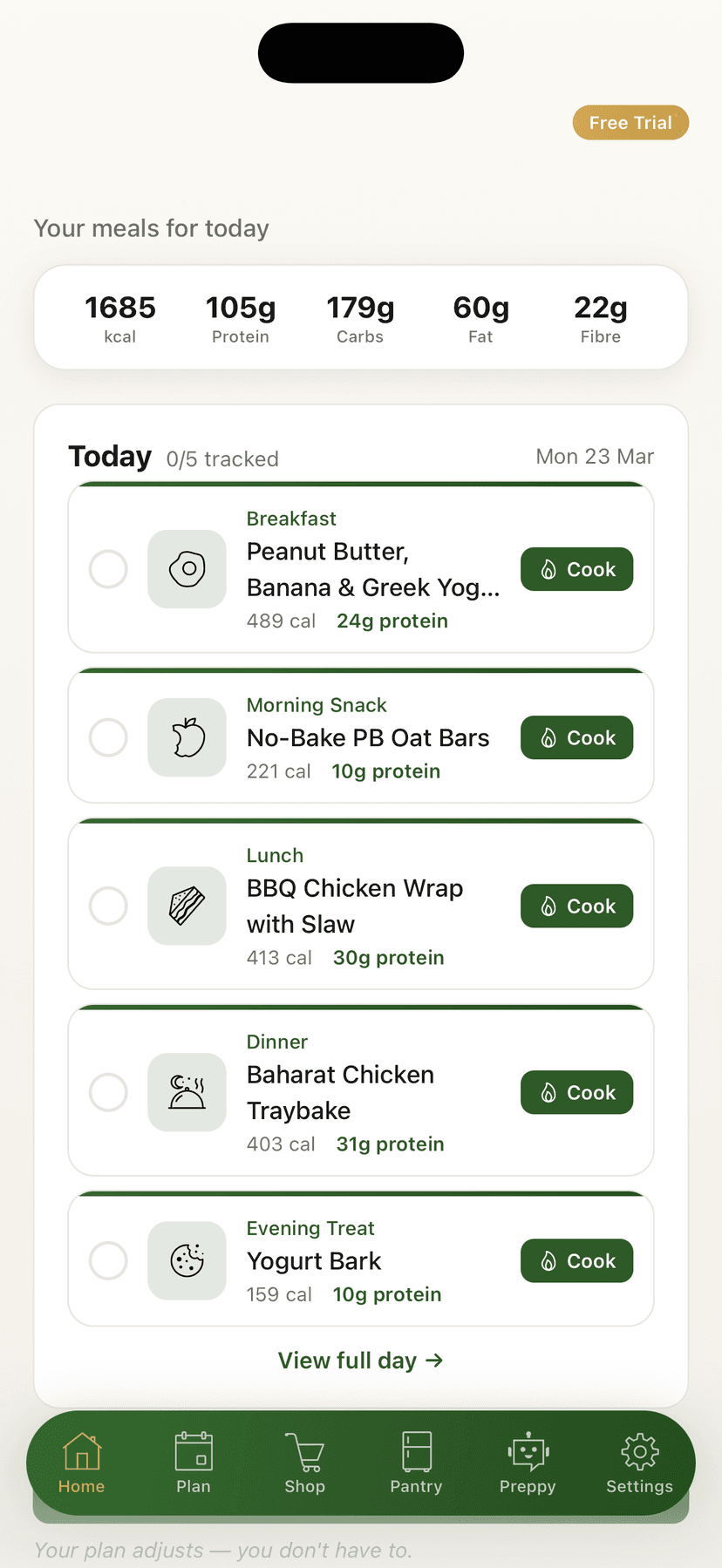
The easiest way to get enough protein consistently is to plan for it. Plan X Prep builds your weekly meal plan around your protein target. It works out your calories from your height, weight, age, sex, activity level and goal, then sets your protein from the macro split you choose. Protein is treated as a minimum: going over is fine, and the planner works to avoid coming up short.
Every recipe is costed from 2,000+ real product prices, checked monthly (Aldi first, with Tesco, Sainsbury's and Asda filling the gaps), so you can see an estimated cost for your week before you shop. No spreadsheets, no calorie counting apps that make you log every bite.

The bottom line
You don't need expensive cuts of meat or fancy protein bars. Chicken thighs, eggs, Greek yogurt, tinned fish, and lentils will do most of the work. Plan ahead, spread protein across your meals, and hitting 130g+ on a budget is genuinely straightforward.
If you'd like a weekly plan built around your protein target — with every meal macro-counted, every ingredient costed, and a full shopping list grouped by supermarket section — join the Plan X Prep waitlist and we'll email you when we launch.
Ready to take the guesswork out of meal planning?
Plan X Prep builds your personalised weekly meal plan around your macros, with real UK supermarket prices and a full shopping list. Join the waitlist and we’ll email you when we launch.
Join the Waitlist