Meal prep sounds organised, efficient, and slightly intimidating. You've seen the Instagram photos — rows of identical containers, perfectly portioned chicken and rice, a kitchen that looks like a restaurant production line.
Here's the thing: you don't need any of that. Meal prep is just cooking with a plan. And it's much easier than you think.
This guide covers everything you need to get started — from your first shopping list to batch cooking basics — with UK-specific tips, supermarket recommendations, and budget advice.
What meal prep actually means
At its simplest, meal prep means deciding what you're eating before you get hungry. That's it. You don't need to cook everything on Sunday. You don't need matching containers. You just need a plan.
There are three levels, and most beginners do best starting at level two:
Level 1: Plan only
Know what you're eating each day. Shop for exactly those ingredients. Cook each meal fresh, but never face the "what's for dinner?" panic because you've already decided.
Level 2: Partial prep (recommended)
Cook components ahead — batch rice (cool it quickly and freeze it in portions), chop veg, marinate meat — so weeknight cooking can take 15 minutes instead of 45. This is the sweet spot for most people: flexible enough to feel normal, structured enough to save time and money.
Level 3: Full prep
Cook complete meals ahead and store them in containers: two days' worth in the fridge (only one day's if they contain rice), the rest in the freezer. Reheat during the week. Best for lunches and gym-goers who need meals ready to grab.
How to start meal prepping this week
You don't need a complete system on day one. Start with these four steps and build from there.
Step 1: Pick 5 dinners
That's it. Five. Not seven — leave room for a takeaway night and leftovers. Choose meals you already know how to cook, or simple ones that don't require new skills.
Good starter dinners:
- Chicken thigh traybake with roasted veg
- Spaghetti bolognese (make a double batch)
- Stir-fry with whatever veg is in the fridge
- Jacket potatoes with tuna and beans
- One-pot chicken curry with rice
Step 2: Write your shopping list
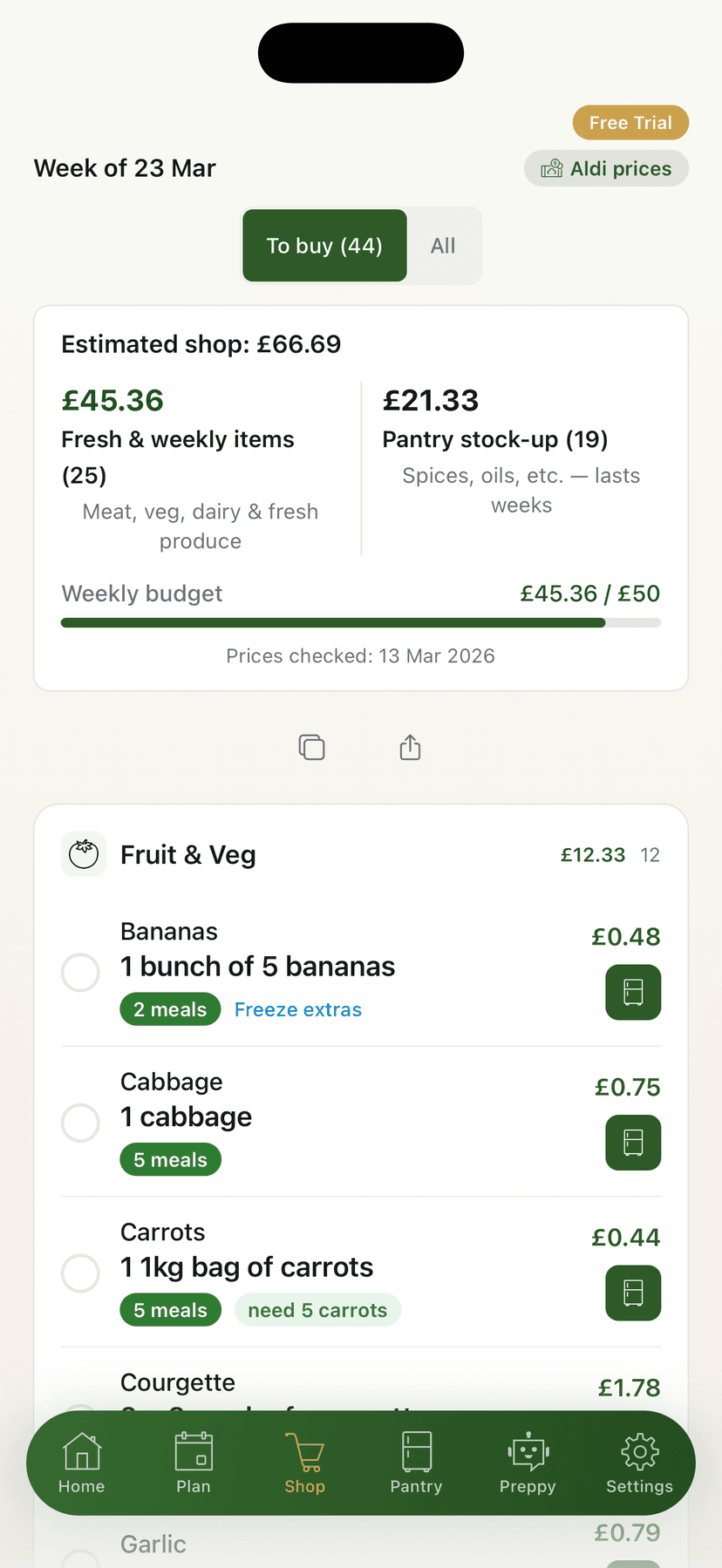
Only buy what you need for those 5 meals, plus breakfast and lunch basics (eggs, bread, yogurt, fruit, wraps). This single change — buying with a plan — cuts out a lot of impulse buys.
Group your list by supermarket section: fruit and veg, meat, dairy, cupboard staples. You'll shop faster and buy less junk.
Step 3: Do one batch cook
On Sunday or Monday evening, make a big pot of something — a bolognese, a curry, a stew. That covers 2–3 lunches for the week: keep two days' worth in the fridge and freeze the rest. Most stews and curries actually taste better the next day.
Double your recipe and freeze half. In two weeks, you'll have a freezer full of home-made ready meals (label and date them).
Step 4: Prep your veg
Spend 15 minutes chopping onions, peppers, and carrots. Store them in containers in the fridge. This single step can make weeknight cooking much quicker, because chopping is often the slowest part.
Meal prep on a budget in the UK
Meal prep isn't just about saving time — it's one of the most effective ways to reduce your food bill.
Shop at Aldi
In Which?'s August 2026 price check of 92 popular groceries, Aldi was 14–18% cheaper than Tesco and Sainsbury's, with or without loyalty prices. Its own-brand basics (rice, pasta, tinned tomatoes, frozen veg) are just as good.
Buy frozen vegetables
Frozen veg is picked and frozen at peak freshness, so it's about as nutritious as fresh (sometimes more so). A big bag of frozen veg costs a pound or two and lasts weeks.
Use the whole packet
One of the biggest sources of food waste is buying a 500g pack of something when you only need 200g. The other 300g goes off. Plan meals that use the full packet — or plan two meals that share the same ingredient.
This is where a smart shopping list makes a real difference. It adds up quantities across all your meals and shows them as the packs you'll actually buy. When your meals share ingredients, fewer half-used packs end up in the bin.
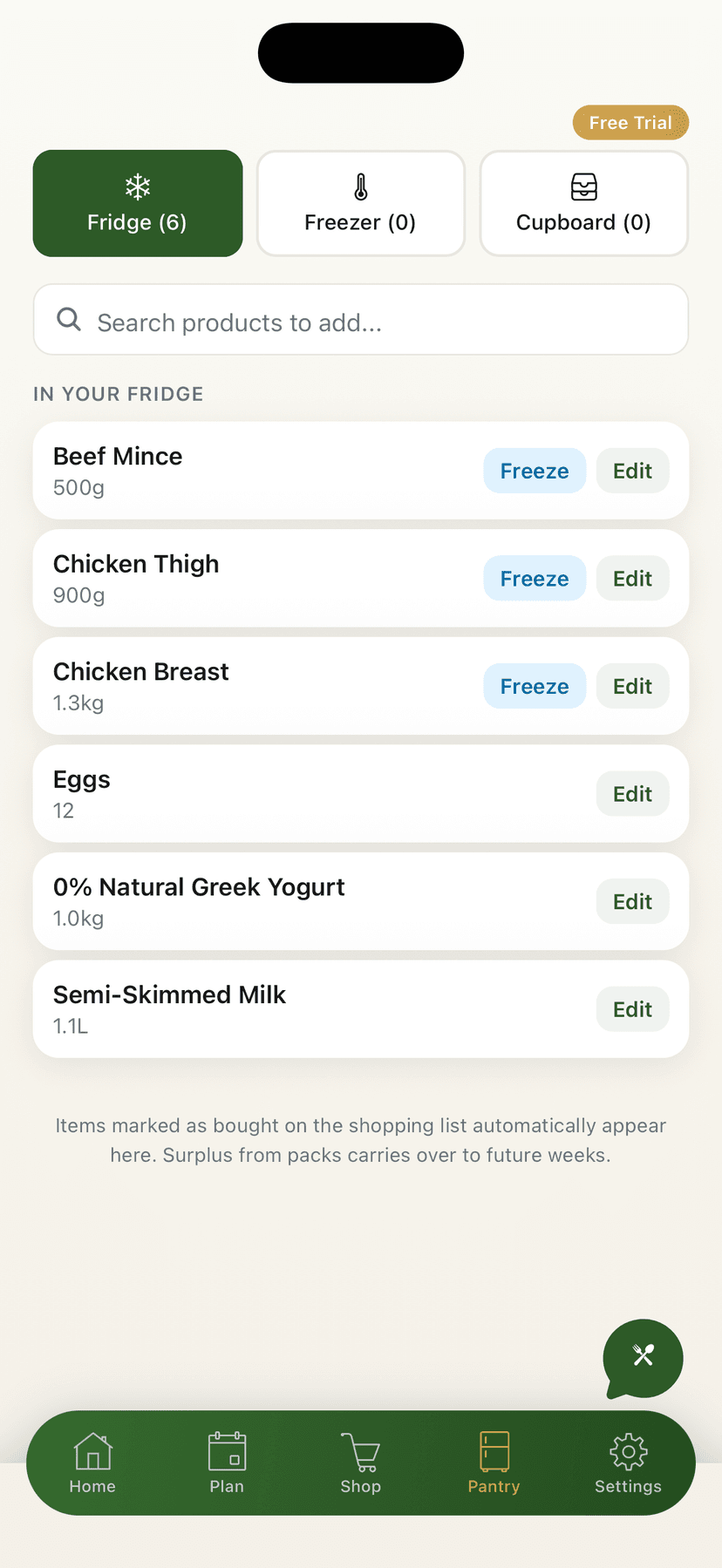
Track what's in your fridge
Before you shop, check what you already have. That half-used bag of spinach, the rice in the cupboard, the chicken thighs in the freezer — they're all ingredients for this week's meals if you plan around them.
Common meal prep mistakes (and how to avoid them)
Cooking too much variety
Three different dinners repeated is better than seven unique meals. Less variety means fewer ingredients, less waste, and less decision fatigue. You can rotate your menu every week for variety without cooking something different every night.
Not accounting for leftovers
Most stews, curries, and pasta bakes taste better the next day. Plan for it. A double batch of bolognese on Monday becomes lunch on Tuesday and Wednesday. That's three meals from one cooking session.
Buying ingredients you won't use
A plan goes a long way to fixing this. If it's not on the list, don't buy it. That jar of harissa paste and the bag of chia seeds will sit in your cupboard for months.
Making it too complicated
You don't need 15 containers, a label maker, and a colour-coded schedule. Five dinners. One batch cook. One shopping list. That's meal prep. Everything else is optional.
Meal prep for specific goals
Meal prep for weight loss
If you're trying to lose weight, meal prep gives you control over portions and calories. When every meal is planned, there's less room for the 8pm "I'll just have some toast" that turns into 600 calories of cheese on toast.
Focus on high-protein meals that keep you full. Protein is the most filling macronutrient, so aiming for around 30g per meal can help keep hunger in check between meals.
Meal prep for muscle gain
When you're in a surplus, the challenge is eating enough. Prep calorie-dense meals that are easy to eat: rice bowls, wraps, pasta with protein, overnight oats with peanut butter. Having meals ready means you don't skip meals when you're busy.
Meal prep for families
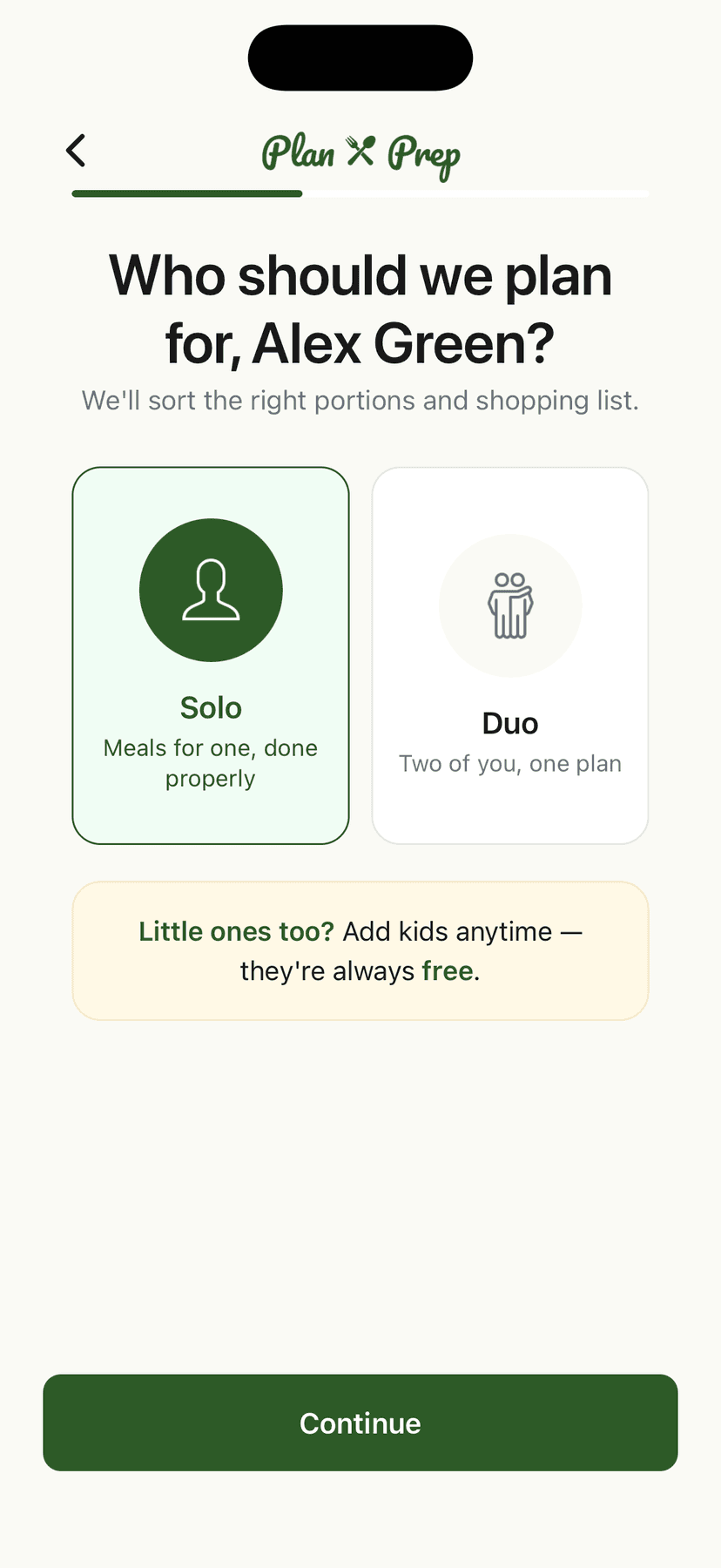
Plan X Prep handles household scaling automatically. Tell it who you're cooking for (one or two adults, plus up to two children), and it adjusts portions and shopping quantities. One plan, one shop, with each person's portion worked out.
Let an app handle the planning for you
If picking recipes, calculating portions, and writing shopping lists feels like too much, that's exactly what Plan X Prep does.
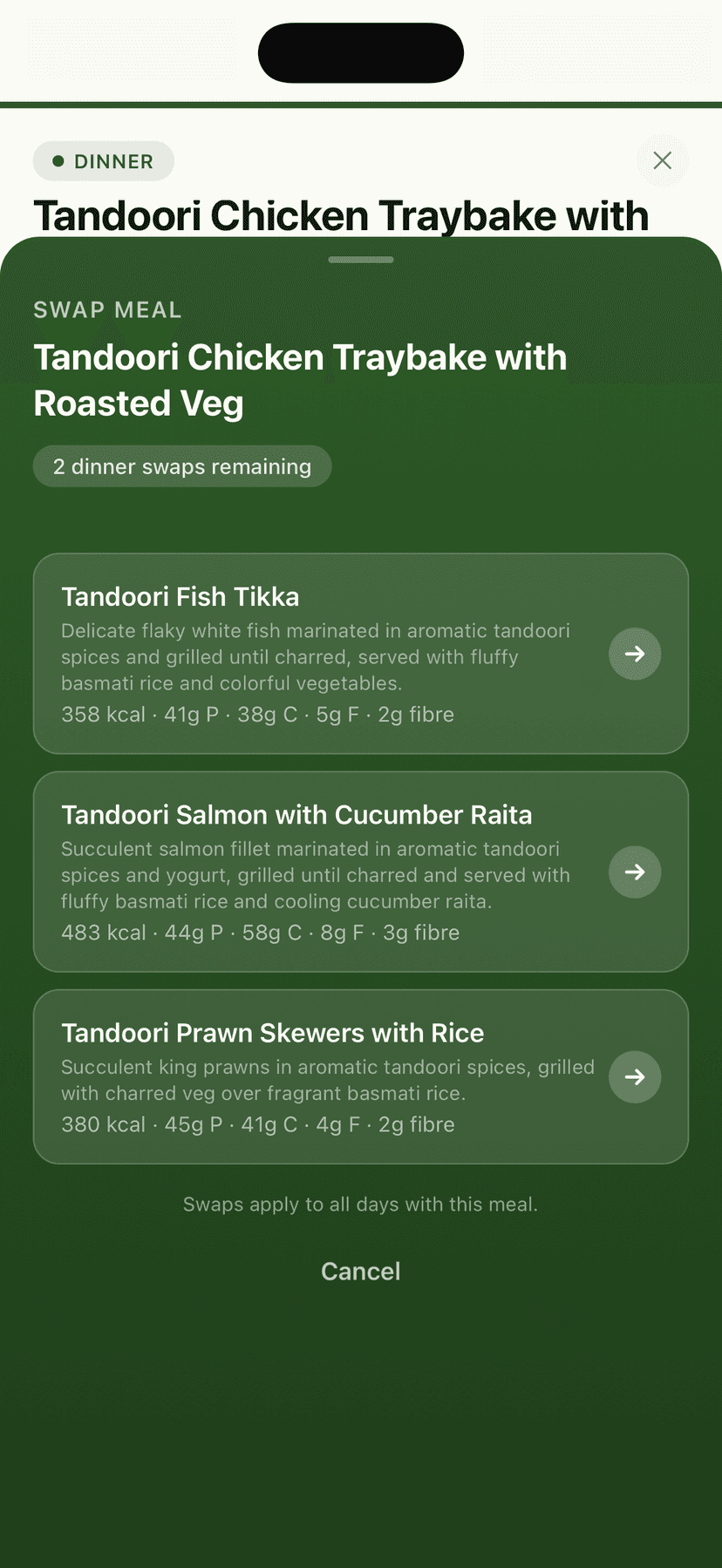
You tell it your goals, dietary preferences, and what foods you dislike. It builds a full week of meals around your macros, with a complete shopping list grouped by supermarket section and an estimated cost from real UK supermarket prices. Don't fancy a meal? Tap swap and pick from up to three similar meals, and your shopping list updates to match.
No spreadsheets. No calorie counting. No staring at the fridge wondering what to cook.
The bottom line
Start small. Five dinners. One batch cook. One shopping list. That's meal prep — and it's enough to save you time, money, and the daily stress of deciding what to eat.
If you want the planning done for you, join the Plan X Prep waitlist and we'll email you when we launch: personalised weekly meal plans built around your macros, with real UK supermarket prices.
Ready to take the guesswork out of meal planning?
Plan X Prep builds your personalised weekly meal plan around your macros, with real UK supermarket prices and a full shopping list. Join the waitlist and we’ll email you when we launch.
Join the Waitlist