You can write the best training programme in the world, but if your client goes home and eats pizza four nights a week, they're not going to see results. And when results don't come, they blame the training — and they leave.
Nutrition is the missing piece for a lot of personal training clients. And yet many trainers don't offer it, because building meal plans is time-consuming, requires specialist knowledge, and doesn't scale.
That's changing. Here's why PTs who add meal planning can see better results, longer retention, and a genuine competitive advantage — and how to do it without spending hours in a spreadsheet.
The client retention problem every PT faces
Plenty of PT clients leave within a few months. A common reason? "I'm not seeing results."
Often, the issue is nutrition — not the programming. A client training three times a week but eating 500 calories over maintenance every day will not lose fat. Full stop. And when the scales don't move, they lose motivation, skip sessions, and eventually cancel.
Why it matters for your business
- Clients who get help with food as well as training have a better chance of seeing results
- Clients who see results are more likely to stay
- A nutrition add-on can raise what each client is worth to you, without adding session time
The case is simple: nutrition support can help clients get results and stay longer. Both of those mean more revenue for you.
Why many PTs don't offer nutrition (yet)
It takes too long
Building a personalised meal plan takes hours. Different calorie targets, different dietary preferences, different allergens, different household sizes. For one client, it's manageable. For twenty? Impossible without automation.
The knowledge gap
Macro calculations, recipe variety, dietary restrictions, portion scaling — it's a lot to manage correctly. Most PT qualifications cover nutrition basics, but not the practical mechanics of building a seven-day meal plan with a shopping list.
Liability concerns
PTs worry about giving "nutrition advice" without a formal nutrition qualification. The distinction matters: providing a structured meal plan tool is different from prescribing a clinical diet. A platform that does the calculations helps, though clients with a medical condition should still see their GP or a registered dietitian.
Cost
Paying a nutritionist to write plans for your clients adds up quickly, and it still doesn't scale to each client's individual needs.
The platform solution
This is where platforms like Plan X Prep come in. Instead of building plans yourself, you give your clients access to an app that generates personalised weekly meal plans automatically — built around their own calorie and macro targets.
How it works for your clients
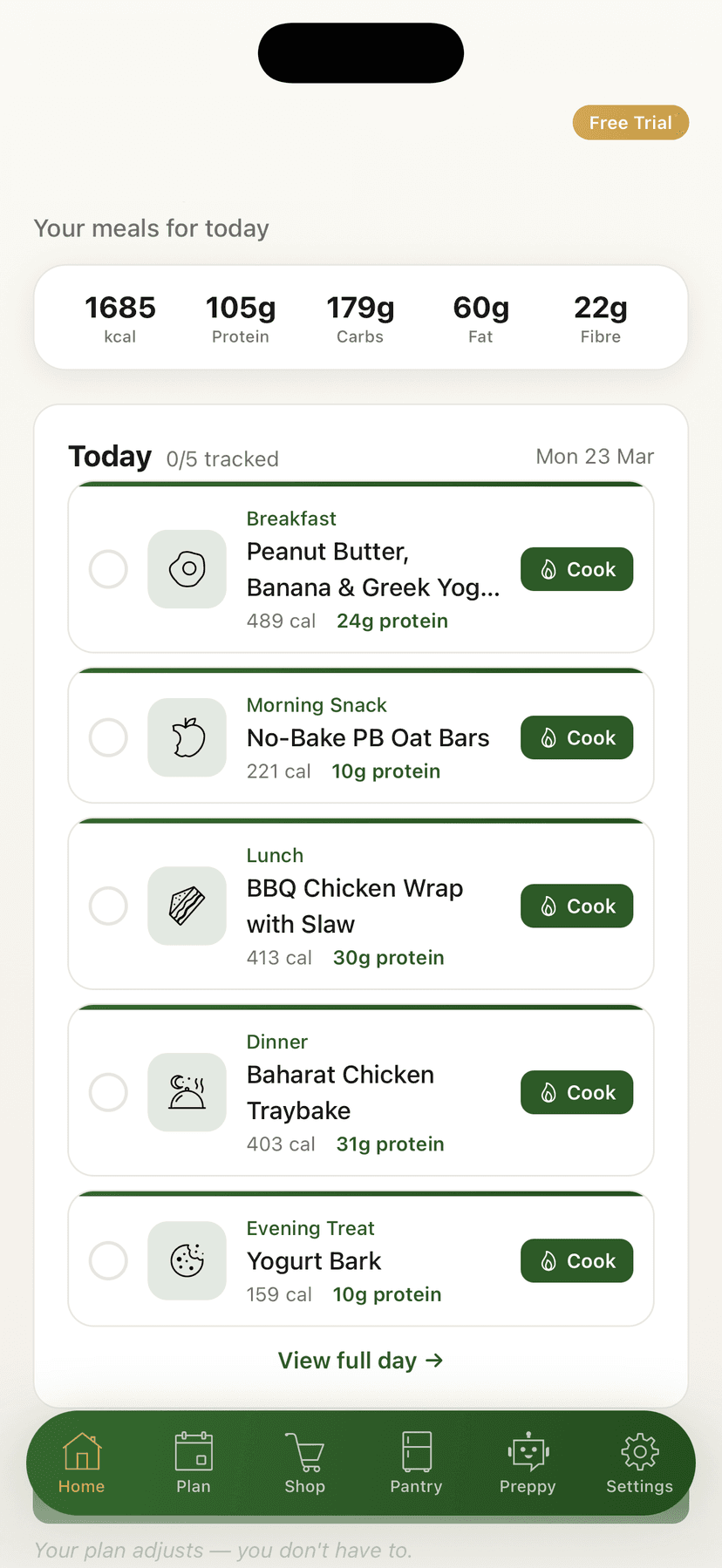
Your clients download the app, complete the onboarding (goals, dietary preferences, allergies, household size), and get their first full week of meals. Every meal shows its calories and macros, an estimated cost per serving, and a step-by-step recipe.
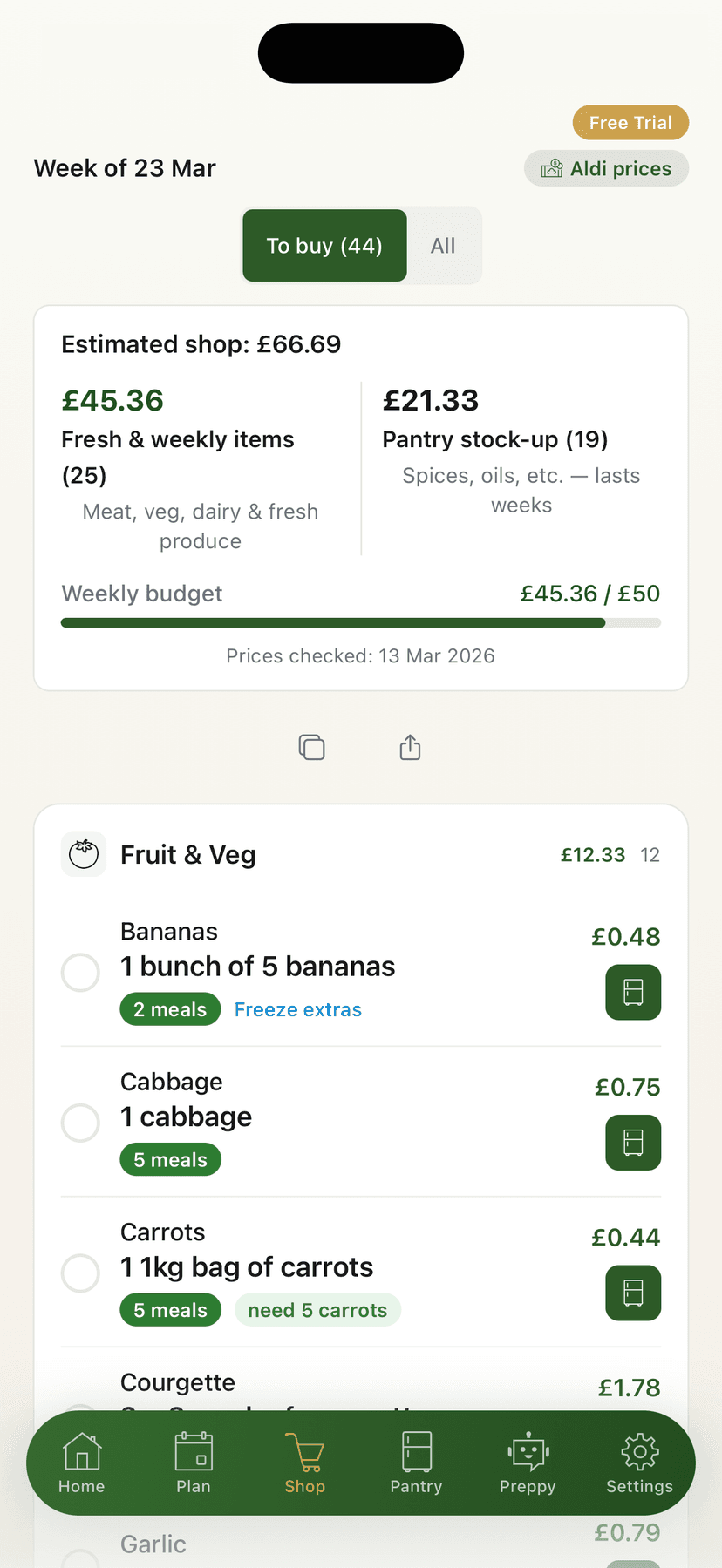
They get a full shopping list grouped by supermarket section, priced at Aldi first, with Tesco, Sainsbury's and Asda filling the gaps. They see an estimated total before they shop.
How it works for you
- 1You sign up for a gym or PT plan
- 2You share one invite link with your clients
- 3They sign up, do the onboarding, and get their first meal plan automatically
- 4You approve them from an organisation dashboard in the app, where you can also see who's joined and export your member list
No development, no nutrition degree, no hours building spreadsheets.
What makes this different from a calorie tracker
MyFitnessPal's free calorie tracker and apps like it put the burden on the client. They have to search for foods, log every meal, and make their own food choices. It's hard work, and plenty of people give up.
A meal planning app is the opposite approach: it tells you what to eat. The plan is built for you, the shopping list is written for you, and the week is planned around your macros. There's no food search to trawl through, because the plan already knows what you're eating.
For PT clients who need structure (and plenty do), that's a much easier place to start.
Features that matter for PTs
- Personalised macros: Every client gets targets calculated from their weight, height, age, activity level, and goal
- Dietary flexibility: Vegetarian, flexitarian, no-pork and no-red-meat diets, plus exclusions for the major UK allergens, including gluten/wheat and dairy
- Food dislikes: Clients can exclude specific ingredients they don't like — the app works around them

- Meal swapping: Don't fancy tonight's dinner? Tap swap and pick from up to three similar meals, each showing its calories and macros
- AI assistant: Clients can ask Preppy "what else can I cook with these ingredients?" and get suggestions based on their plan and pantry (daily limits apply)

The competitive advantage
In most towns, PTs compete on price and personality. Nutrition support is a genuine differentiator — it turns a "training only" service into a complete package: training and food.
Clients who see results often become walking referrals. They tell friends and tend to stay longer. A client who gets proper nutrition support can be worth a lot more to your business over time.
The bottom line
PTs who add nutrition can see better client results, longer retention, and higher revenue per client. With a meal planning platform, there's no reason not to offer it — no nutrition degree required, no hours building spreadsheets, and no development costs.
If you're a PT, gym owner, or fitness professional interested in offering meal plans to your clients, join the waitlist and we'll email you when we launch.
Ready to take the guesswork out of meal planning?
Plan X Prep builds your personalised weekly meal plan around your macros, with real UK supermarket prices and a full shopping list. Join the waitlist and we’ll email you when we launch.
Join the Waitlist